
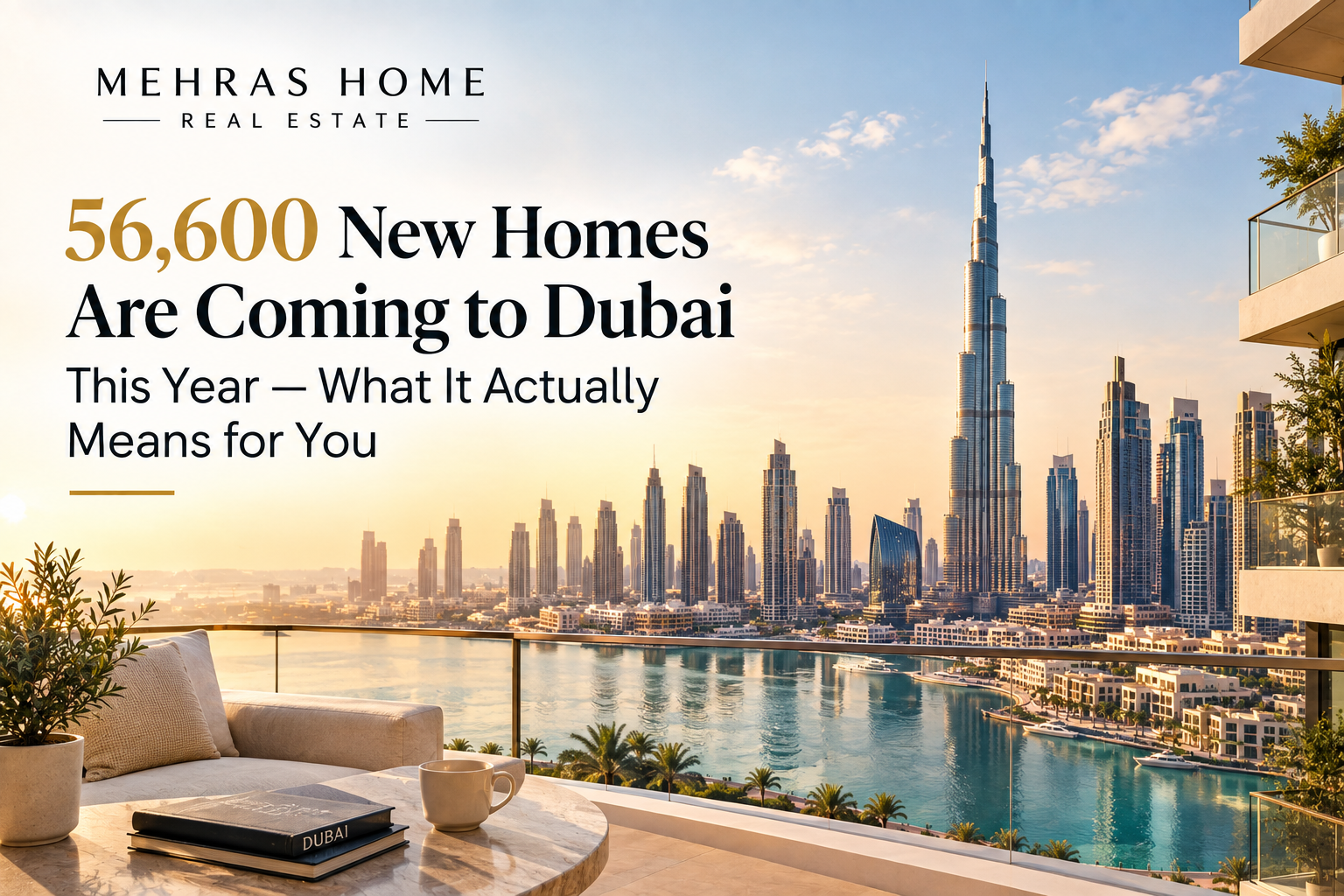
Dubai is about to get a lot more crowded with “for sale” signs — in a good way. According to Colliers’ latest UAE Real Estate Market Report, the emirate is expected to welcome approximately 56,600 new residential units by the end of 2026. That’s on top of an already record-breaking pace of deliveries earlier in the year.
If you’re planning to buy, rent, or invest in Dubai property, this single number changes a lot of the calculations you should be making right now. Let’s break down what it really means.
Where Is All This New Supply Coming From?
During the second quarter of 2026 alone, Dubai delivered around 11,650 new homes — a mix of roughly 9,200 apartments and 2,450 villas. Abu Dhabi added close to 2,200 units in the same period, with handovers concentrated in growing communities like Al Shamkhah, Yas Island, Bloom Living in Zayed City, and Al Raha Beach.
For the rest of 2026, another wave is on the way — thousands more units are scheduled for completion across Dubai, Abu Dhabi, and the Northern Emirates as the wider UAE market moves toward what analysts are calling “a more balanced phase.”
Put simply: after years of demand outpacing supply, supply is finally starting to catch up.
Does More Supply Mean Falling Prices?
This is the question we get asked constantly at Mehras Home Real Estate, and the honest answer is: it depends entirely on where and what you’re looking at.
More supply doesn’t hit every neighbourhood equally. Established, well-connected communities with strong schools, retail, and transport links tend to keep absorbing new stock without much price pressure, because demand there is driven by end-users who actually want to live there long-term, not just investors flipping units.
Where you’re more likely to see softer pricing and better negotiating power is in newer, less-established areas that are seeing a flood of similar unit types launched close together. If ten towers with near-identical layouts are all completing in the same corridor within months of each other, buyers naturally have more leverage.
Good News for Renters and First-Time Buyers
If you’ve felt priced out of Dubai’s rental or entry-level sales market over the past couple of years, this wave of new supply is genuinely good news. More completed units means more choice, more competitive rents, and developers sweetening the deal with better payment plans and incentives to move stock.
This is especially true at the affordable and mid-market end, where several developers have already started designing more practical layouts and flexible payment structures specifically to capture this growing pool of middle-income buyers.
What Smart Investors Are Doing Right Now
1. Look past the headline number. 56,600 units sounds huge, but Dubai’s population and end-user demand continue growing steadily too. The key is matching supply data to specific submarkets, not reacting to the citywide figure alone.
2. Favour completed or near-complete stock in supply-heavy areas. In neighbourhoods with a lot of upcoming handovers, ready properties from established developers with a track record of quality tend to hold value better than speculative new launches.
3. Watch rental yields, not just capital appreciation. With more supply, rental growth may moderate in some areas — but yields in well-located communities are still outperforming many major global cities.
The Bottom Line
A record supply wave doesn’t automatically mean a downturn — it means a shift in who holds the negotiating power, and where. For buyers and renters, more choice is finally arriving. For sellers and investors, the winning strategy is getting more specific: it’s no longer just “Dubai is booming,” it’s “which exact community, developer, and property type is booming.”
Not sure whether your target area is getting flooded with new supply or staying tight? Mehras Home Real Estate tracks handover schedules street by street across Dubai. Reach out and we’ll walk you through exactly what’s happening in the community you’re considering.


Join The Discussion